 Batch Picture Resizer
NEF to JPG converter Software: desktop vs online
Online tools upload your files to a server you do not control and often cap the count at five or ten per session. A desktop converter keeps every NEF on your own machine and runs whole folders at native speed, tied to your CPU rather than your upload.
Browser-based converters are handy for one or two files. They start to hurt once you have full memory card or a slow connection, and they cap how many files you can drop in at once.
The privacy side matters more than people expect. Your NEF files are full-resolution originals, and an online tool sends them off to a remote server. For personal snaps that is your call; for paid client work it is a real risk. A desktop converter does the same job without the upload, and if you also shoot Canon, the same app handles CR2 files from Canon too.
Are your newer Nikon Z-series NEF files supported?
Newer Nikon Z bodies like the Z8, Z6III, and Z50II write updated NEF variants that many older codecs and editors cannot read yet. A NEF to JPG Converter Software that ships its own RAW library opens them without waiting for a codec update.
This trap hits recent buyers hardest. NEF runs across Nikon's lineup, from older DSLRs like the D7500 and D850 to the Z-series mirrorless bodies. But the newest Z cameras use updated, high-efficiency NEF variants, and owners on the DPReview forums report that much of their existing software cannot open them at launch. Installing a codec often does nothing, because the codec predates the camera. A converter that carries its own RAW decoding library reads those files directly, so a Z8 or Z6III NEF drops into the batch and converts the same as an older D850 file.
Convert NEF to JPG without extra Nikon software
You do not need Nikon NX Studio, Photoshop, or a codec pack. A standalone desktop converter reads your .NEF files directly and writes JPGs, so you can process a whole folder without opening a heavy editor first.
Plenty of guides tell you to install a full Nikon editor or fire up Photoshop just to save a JPG. For a straight conversion, that is more than the job needs. Nikon's own editor is free and accurate, but it is built around editing one image at a time and feels slow when you have a folder of hundreds. A dedicated converter is faster for the plain "turn these into JPGs" task and skips the photo-editor learning curve entirely.
Why Batch Picture Resizer fits Nikon RAW conversion software
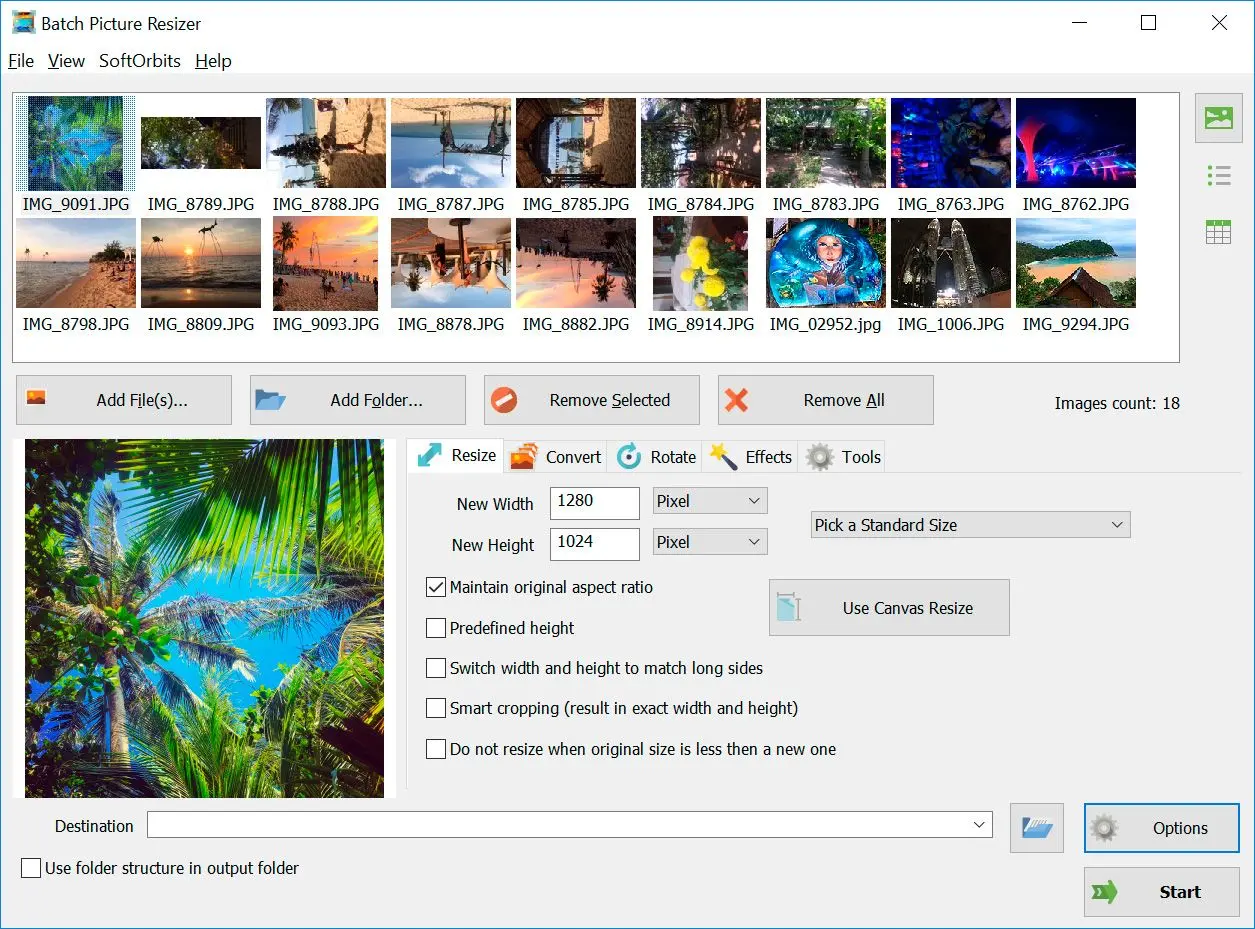
Batch Picture Resizer is a desktop converter built for whole folders, not a full photo editor. You control JPEG quality and resolution, resize on request, and keep EXIF. There is also an Explorer right-click shortcut and a command line for scripted jobs.
If you convert NEF often, the small workflow touches add up. A right-click entry in Windows Explorer sends a stack of selected files straight to JPG, and the command line can script the job or wire it into a scheduled task, so a watched folder of new shots converts on its own.
Converts whole folders and memory cards of NEF files in a single run
Controls JPEG quality and DPI, with optional resize and a target file size in KB
Keeps EXIF, with Explorer right-click and command-line shortcuts
Runs on Windows 7, 10, and 11 in 32-bit or 64-bit
Not a full RAW editor for tone curves and local adjustments
Windows only, no macOS build
 Batch Picture Resizer