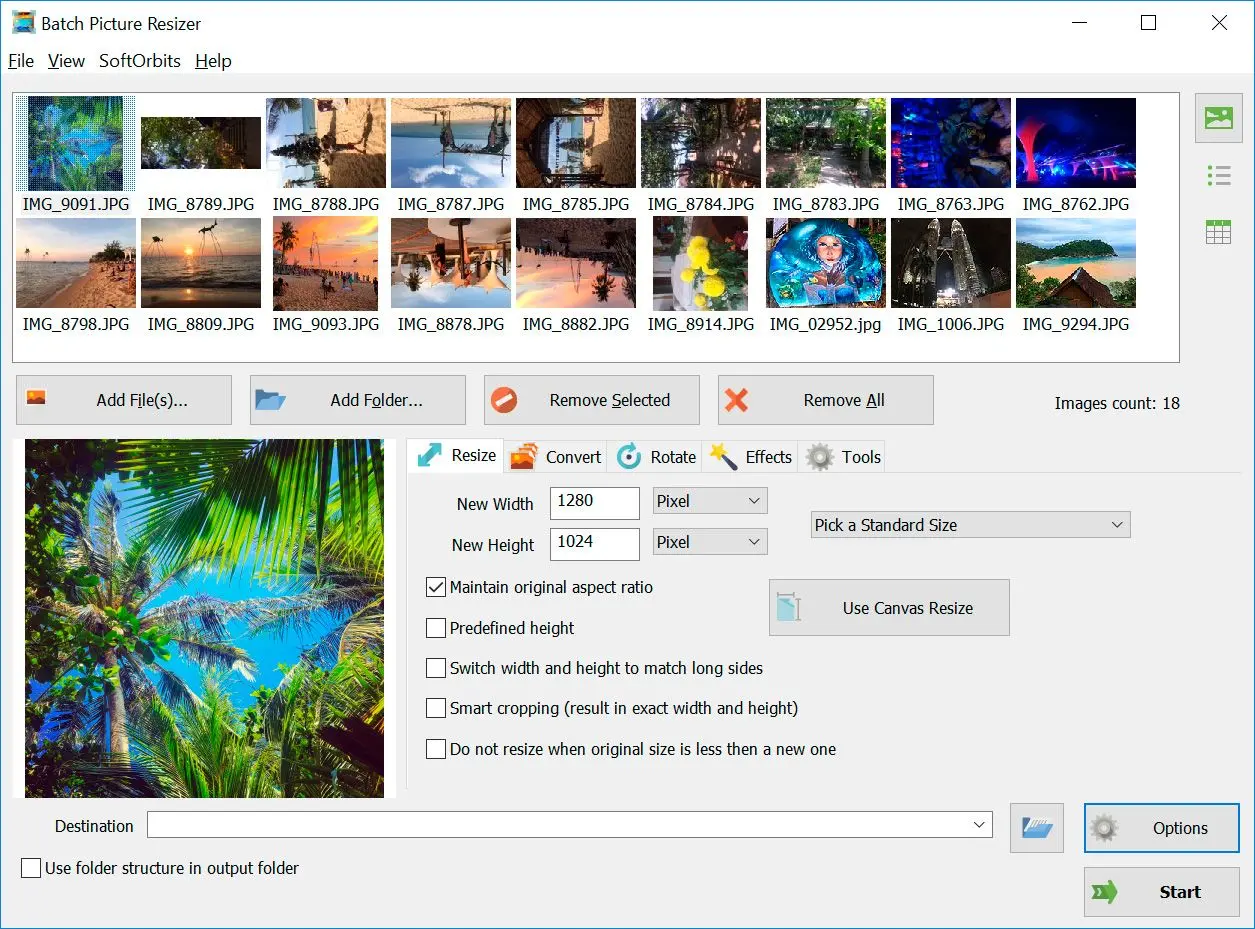
 Batch Picture Resizer
Batch Image Resizer is an easy, user-friendly tool that helps you resize multiple photos, convert, flip, mirror, or rotate them in batch mode.
Batch Image Resizer is an easy, user-friendly tool that helps you resize multiple photos, convert, flip, mirror, or rotate them in batch mode.
How to convert RAW to JPG free with Windows Photos
Install the free Raw Image Extension from the Microsoft Store, open the RAW file in Photos, then use the menu to save a copy as JPG. It works one file at a time, with no quality slider, and it needs Windows 10 version 1903 or newer.
The Windows Photos route costs nothing and installs almost nothing. Microsoft's Raw Image Extension is a free Store app built on the libraw codec, as How-To Geek documents, and it teaches Photos and Explorer how to read RAW.
What Windows Photos cannot do
There is no batch mode. When a user asked Microsoft's own support forum how to batch-convert a folder of images in Photos, the answer was to go use a third-party converter, with a warning attached about potentially unwanted products on such sites. You also get no quality control, because Photos writes the JPEG at whatever compression it likes, so the 90-95 sweet spot is not yours to choose. And the support lags for new cameras. If your body shipped last quarter, Windows may show a blank icon where the thumbnail should be.The extension itself can break. After Raw Image Extension updated to version 2.4.3.0, a Canon CR2 and CR3 shooter reported File Explorer hanging on any folder with RAW files, on two separate PCs, with only a reboot as a fix. Rolling back to the previous version of the extension was the workaround. The thread is linked in the pitfalls section below.
Which free desktop RAW converters actually work?
RawTherapee, darktable, IrfanView with the CamRAW plugin, XnConvert and Photopea all convert RAW to JPG for free. Each carries an honest catch. Some have a steep editor UI, some a narrower format list, and XnConvert stops being free the moment you use it for paid work.
Free is the second word most people attach to this search. Here is the map. These are not stripped demos. Each one is a working tool with a limit you should know before you point it at a full memory card.
| Tool | Batch? | The catch |
|---|---|---|
| RawTherapee (GPLv3) | Through the processing queue | A professional editor UI, not a two-click converter. Excellent demosaicing, steep learning curve. |
| darktable (GPLv3) | Export across the library | The same story. A Lightroom-shaped tool for enthusiasts, built on the rawspeed library. |
| IrfanView + CamRAW plugin | Yes, Batch Conversion | Free for home use only. The plugin format list (DNG, NEF, ORF, RAF, MRW, DCR, SRF/ARW, PEF) is narrower than a dedicated converter, and the interface looks dated. |
| XnConvert | Yes, plus 80+ batch actions | Free for personal and educational use. A studio or business needs a paid licence. |
| Photopea (browser) | No | Opens one file per session. Runs client-side, so nothing uploads. |
RawTherapee and darktable are arguably the best free RAW to JPG converters on Windows if you want a full editor and do not mind the climb, and both are free under GPLv3. For pure conversion volume, IrfanView with the CamRAW plugin has had batch conversion for years, and XnConvert chains resize and colour actions across a folder. Read the XnConvert licence before you use it in a studio. Personal use is free, commercial use is not.
Photopea is the odd one out. It is a browser editor that opens DNG, CR2, CR3, NEF, ARW, RW2, RAF, ORF, plus the rare FFF. It processes them on your machine rather than a server, then exports JPG. One file at a time, which rules it out for a card full of shots, but it installs nothing at all.
One note about platforms, people ask this often. Our converter is Windows-only. RawTherapee, darktable and XnConvert all ship macOS builds and do the same job on a Mac. Photopea works in any browser on any machine.
How do you export RAW to JPG in Lightroom or Photoshop?
Both run on the same Adobe Camera Raw engine. In Lightroom you select the files in Library, then Export with JPEG as the format. In Photoshop you point Image Processor at a folder, or record an Action and run it through Automate and Batch. Both need a Creative Cloud subscription.
Lightroom has the most complete batch pipeline of anything in this article. Select as many RAW files as you like in the Library module, hit Export, choose JPEG, set quality and pixel dimensions, and it processes the lot. Adobe's Camera Raw camera support list gets updated with new releases, so fresh bodies are handled sooner than Windows manages.
Photoshop reaches the same engine by a different door. File > Scripts > Image Processor points at a folder and writes JPEGs. Or you record an Action (open, save as JPEG, close) and run it through File > Automate > Batch.
If Creative Cloud is already on your machine, use it and install nothing else. Buying a subscription to turn one holiday's worth of CR2 files into JPEGs is an expensive answer to a cheap question. You can watch that exact request play out on the Adobe forum, where a user asks how to batch-convert 100 Camera Raw files at once and every answer routes back through Adobe software.
Are online RAW to JPG converters safe, and what are the limits?
Most of them upload your originals to someone else's server, and the free tiers cap you at 1 GB, which is a handful of RAW frames. Picflow is the exception, processing in the browser. Canva cannot take a RAW file in the first place, despite being a popular search.
Here is what the named services actually do, checked against their own pages.
| Service | Where it processes | Free limit | What happens to your files |
|---|---|---|---|
| FreeConvert | Their server | 1 GB per file | 256-bit SSL, deleted after a few hours. The free tier means a queue and ads. |
| Convertio | Their cloud | 1 GB | Uploads deleted immediately, converted files after 24 hours. |
| iLoveIMG | Their server | Not stated | Two quality tiers. Original pixels are the paid one. |
| Picflow | In your browser | Not stated | States it cannot see or store your images, because they never leave the device. |
| Canva | - | - | RAW is not a supported upload type, see below. |
Browser-based conversion has a second, quieter problem, and it is metadata. A tool that renders your photo through the Canvas API only ever sees pixels, never the file header, so it rebuilds the JPEG from scratch and the EXIF block does not come along for the ride. ConvertSafe explains the mechanism. If shutter speed, lens and date matter to you, check the output before you delete the originals.
Canva does not convert RAW at all
Raw to JPG Canva is a real, recurring search, and the answer is no. Canva's supported upload formats are the ordinary web ones, JPEG, PNG and SVG among them. RAW is not on that list, so a CR2 or NEF file will not upload, let alone convert. If a page tells you otherwise, nobody there has tried it.Can you open a RAW file without converting it?
Yes. On Windows 10 version 1903 or newer, install Raw Image Extension from the Microsoft Store and RAW files open in Photos directly, with thumbnails back in Explorer. Converting is only needed when you want to share the photo or edit it somewhere that will not read RAW.
Plenty of people search for a converter when what they wanted was a viewer. If the goal is just to look at the shots and decide which ones are keepers, you do not have to write a single JPEG.
Raw Image Extension is the free route, and it restores Explorer thumbnails at the same time. The limit is worth to know in advance. The extension is built on the libraw codec and, as How-To Geek notes in its guide to opening RAW images on Windows, it does not support every RAW format. If yours is missing, RawTherapee opens RAW for free on the desktop, Photopea opens it for free in a browser tab, and FastRawViewer sells a paid viewer that shows the true unprocessed frame with a RAW histogram.
Are RAW photos really sharper than JPEG?
Straight out of the camera, the JPEG usually looks sharper, because the camera already applied sharpening, contrast and saturation to it. The RAW file holds more data, not more polish. After processing, RAW beats JPEG. Before processing, it looks flat, and that surprises people.
That misunderstanding sits behind a lot of RAW to JPG searches. Someone shoots RAW+JPEG, compares them on screen, decides RAW looks soft and washed out, and concludes the format is overrated.
What actually happened is that the camera processed the JPEG for you. Sharpening, contrast, saturation and vibrance were applied inside the body, then the image was squeezed down to 8 bits per channel. The RAW file skipped all of that on purpose. It still carries 12 or 14 bits per channel, which is 4,096 to 16,384 levels of tone against the 256 a JPEG gets, and that is the headroom you use later to pull back a blown sky or lift a face out of shadow.
So RAW is not sharper. It is richer. Sharpening you can add in five seconds, the tones a JPEG dropped are not in the file at all.
Converting RAW to JPG is a one-way door. Those 12-14 bits per channel are compressed into 8, and the discarded tonal information is gone for good, no matter what tool you use. Always keep the RAW originals as your archive and convert copies. Export once at high quality rather than re-saving the same JPEG again and again.
Which RAW format does your camera shoot?
Canon writes CR2 on older bodies and CR3 on newer ones, Nikon writes NEF, Sony writes ARW, Fujifilm writes RAF, Olympus writes ORF, Panasonic writes RW2, Pentax writes PEF. All of them convert to JPG the same way here, and each major brand has a dedicated guide below.
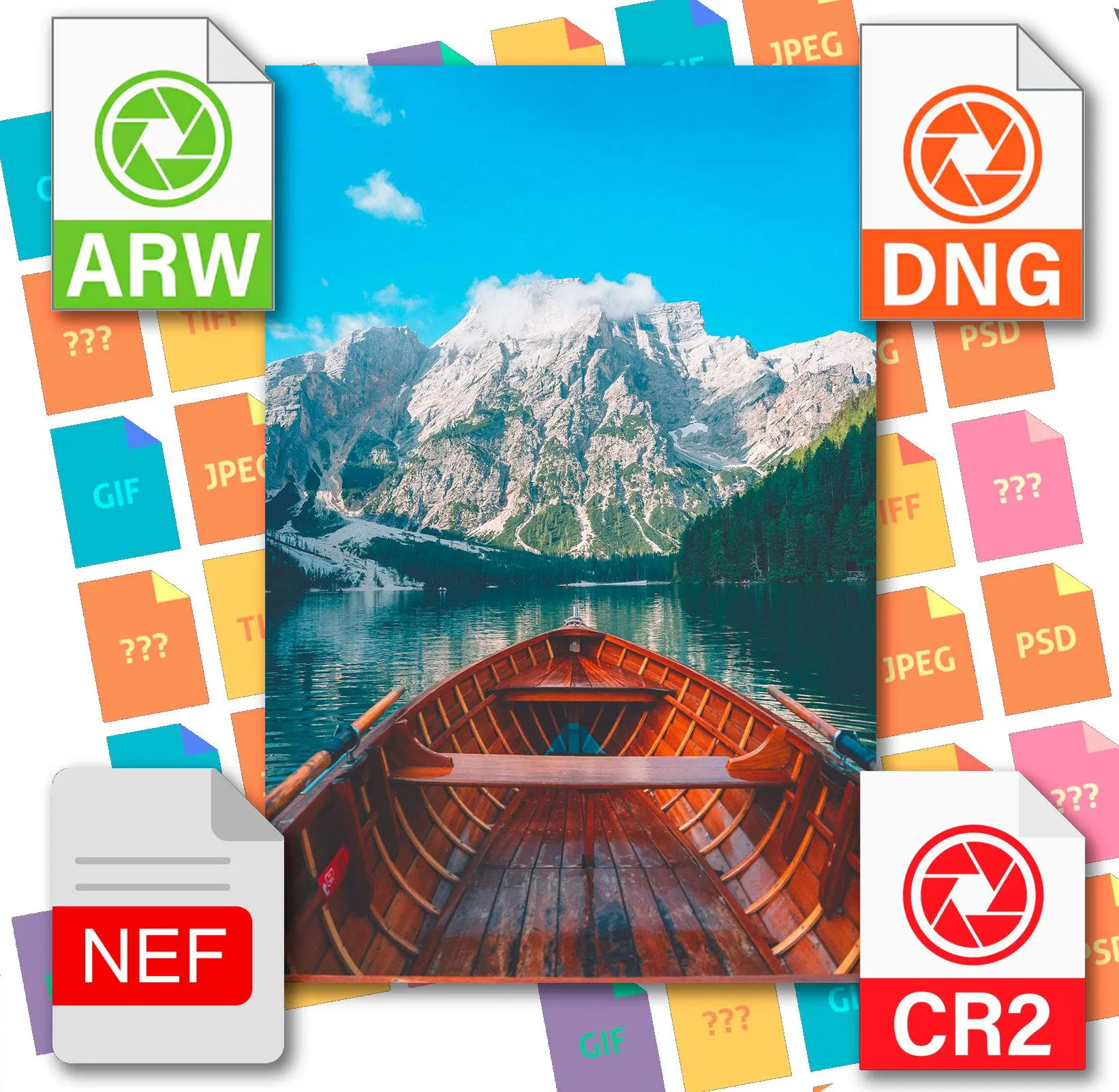
The extension on your files tells you what you are dealing with, and for the three biggest brands we keep a separate walkthrough with brand-specific quirks.
| Camera | Extension | Brand guide |
|---|---|---|
| Canon, newer mirrorless | .CR3 | CR3 to JPG converter |
| Canon, older DSLR bodies | .CR2 | CR2 to JPG converter |
| Nikon | .NEF | NEF to JPG converter software |
| Sony | .ARW | Sony ARW to JPG converter |
| Panasonic | .RW2 | Panasonic RW2 to JPG converter |
| Fujifilm, Olympus, Pentax | .RAF, .ORF, .PEF | Handled by the converter above, no separate guide needed |
The program reads unprocessed sensor data from more than 40 RAW container types. Less common containers like MOS, Kodak KDC and 3FR work the same way. Adobe DNG, the one open standard in the list, is covered too.
| Format | Extension(s) | Producer | Description |
|---|---|---|---|
| TIFF/EP | .3fr, .ari, .arw and more | ISO | Defines a basic framework for storing raw and processed images in TIFF. |
| Digital Negative (DNG) | .dng | Adobe, Apple | Extension of TIFF/EP, adding information on camera characteristics. Royalty-free. |
| Canon Raw v2 (CR2) | .cr2 | Canon | Based on TIFF and lossless JPEG ITU-T81. |
| Canon Raw v3 (CR3) | .cr3 | Canon | Uses the ISO base media file format container with custom tags and a custom crx codec. |
| Sony RAW (SRF, SR2, ARW, ARQ) | .srf, .sr2, .arw, .arq | Sony | Based on the TIFF container, uses proprietary Makernote fields. May be uncompressed or compressed depending on version. |
| Nikon Electronic Format (NEF) | .nef | Nikon | Stores information sensed according to the geometry of the sensor's individual photo-receptive elements. |
| Pentax Electronic File (PEF) | .pef | Pentax | Preserves information captured at the time of exposure, used by Pentax cameras. |
| Olympus Raw File (ORF) | .orf | Olympus | Captures radiometric characteristics of the scene, compatible with TIFF/EP and Exif metadata. |
| Panasonic Raw (RW2) | .rw2 | Panasonic | Raw format with corrections for geometric distortion and chromatic aberration, based on TIFF. |
Supported Cameras and Phones
SoftOrbits RAW Converter program supports a variety of digital camera models. Some of the cameras that are compatible with this software include:
RAW to JPG conversion settings that affect quality
Quality 90-95 is the practical sweet spot for a high quality RAW to JPG conversion. Below 70 you start seeing compression artifacts in gradients. Resize during the export rather than afterwards, and decide about EXIF before you publish, not after.
JPG is lossy. Every re-compression of a JPEG drops a little more data, so the settings you pick on that first export from RAW are the ones that matter.
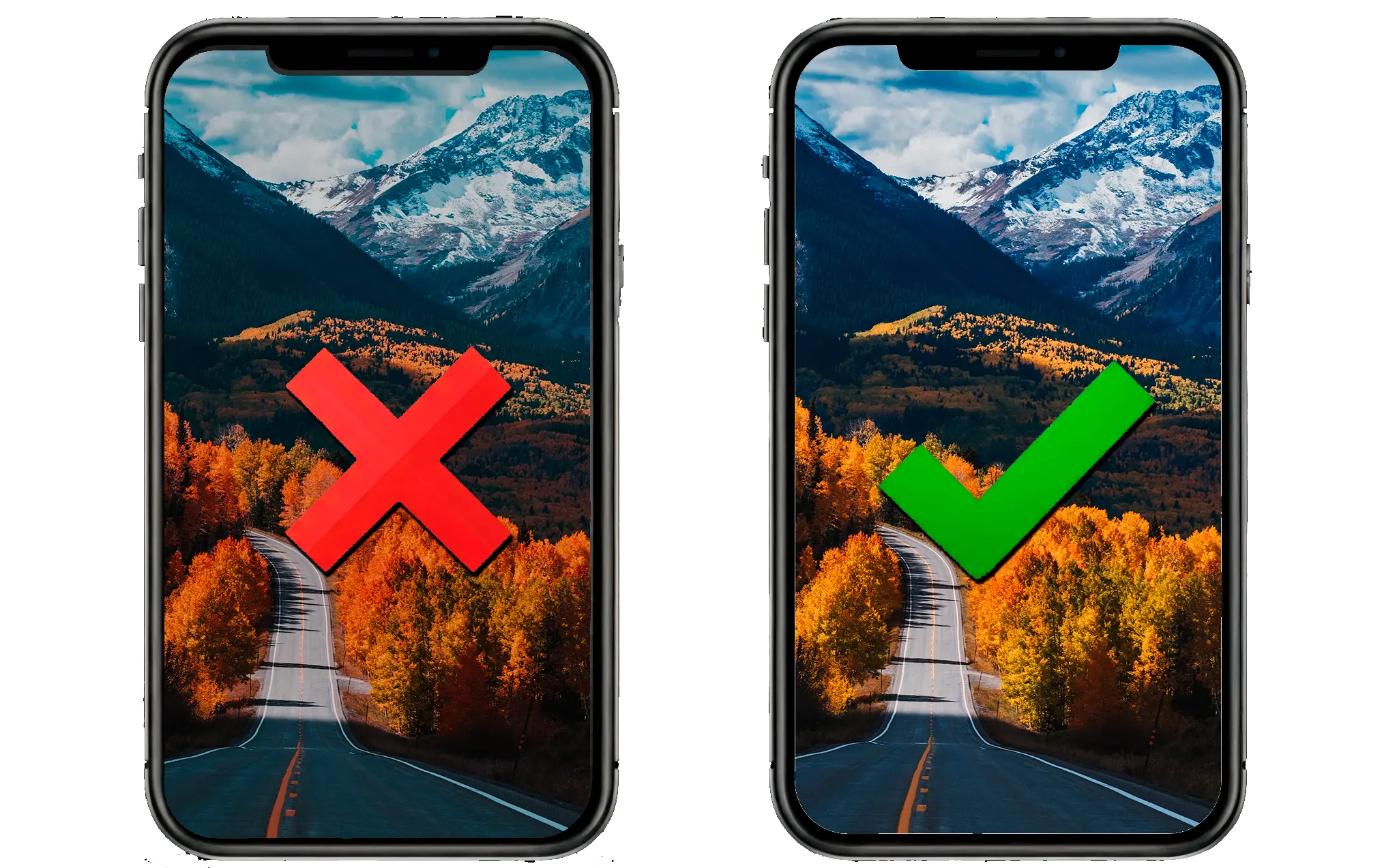
Quality slider (compression ratio)
At 100 the file is large but visually indistinguishable from the RAW preview. At 85 you get files roughly a third of that size, with minor detail loss in gradients and fine textures. Below 70, compression artifacts start to show. For most work 90-95 is the practical sweet spot.Resolution and resizing
If the destination is web or email, resize to the needed dimensions during conversion and skip a separate step. Batch Picture Resizer lets you set pixels, percentage, or physical size in centimetres with a target DPI. The aspect ratio lock prevents distortion. When a portal caps file weight rather than dimensions, switch the unit to KB and the converter trades JPEG quality down just far enough to fit each frame under the limit, so you hit the cap without eyeballing the slider.Color profile
RAW files often carry a camera-specific colour profile. The converter preserves embedded profiles when writing JPEG, so colours stay consistent between camera preview and the exported file.EXIF and metadata
By default, EXIF data travels into the JPEG. Camera model, lens, exposure, GPS coordinates. That combination of coordinates and timestamp says where you were and when, which is fine for an archive and less fine for a public post. Strip metadata during the export if the photo is going online.Free download vs paid license
The raw to JPG converter free download is the complete program, not a feature-locked demo. You can convert files and try every tool during the evaluation period. After that, a one-time license unlocks it for good. No subscription, and nothing charged per image.
The installer from the button above gives you the full program. Convert files, test the batch queue, try the resize and watermark tabs. When the evaluation period ends, the paid key lifts that limit permanently. There is no subscription and no credit system. Nobody charges you per image, and updates within the major version are free.
Desktop software vs online: what actually differs
Online converters are fine for one or two frames and painful for a memory card. Desktop conversion runs at the speed of your CPU instead of your upload, has no file-size cap, and keeps client work off servers you do not control.
Upload each RAW frame (25-60 MB) to a stranger's server. Wait in the free-tier queue. Hit the 1 GB cap. Download the results one at a time, and hope the EXIF survived.
Drop the whole folder in, set JPEG quality once, click Start. No upload, no queue. The batch is limited by your disk, not by somebody's plan, and nobody else is holding a client's photos.
The privacy point is not abstract. Wedding portraits, real estate interiors with visible addresses, product shots under embargo - those are the files that get dropped into a free converter every day, usually by somebody in a hurry, on a deadline.
And when there is no internet at all, on a locked-down work PC or on a laptop in the field, desktop is the only option that still works.
Pitfalls when converting RAW to JPG
Four things break most conversions. An update that broke the codec, a camera too new for it, metadata quietly lost on export, and the mistaken belief that Windows can batch-convert files on its own.
Raw Image Extension is normally the fix rather than the problem. Version 2.4.3.0 still managed to freeze File Explorer for a Canon shooter on two different machines, with a reboot as the only escape. The Microsoft Q&A thread ends with a rollback to the previous version. If Explorer starts hanging on RAW folders right after an update, that is the first thing to check.
RAW containers change between models, not just between brands. A body released a few months ago can write a CR3, ARW or RAF variant that the installed codec has never seen, and you get blank icons and a cheerful "can't preview this file". Another user found that even a purchased extension left him with no thumbnails at all, and Microsoft support ended up telling him to remove the package through PowerShell and reinstall it.
There is no built-in batch conversion in Photos. Faced with a user who had a hundred-plus files to convert, Microsoft support pointed at a third-party converter and attached a warning about potentially unwanted products on such sites. The thread is linked in the Windows Photos section above. Photos will convert one file at a time, and that is all it will do.
Export bugs are real. DxO PhotoLab users reported a GPS longitude flipped from west to east, which put photos shot in Oregon on a map of China, and a separate thread reported IPTC and GPS data missing from JPEGs after export. Both were eventually traced to something other than the converter itself, which is the point: metadata breaks quietly, and you find out later. Check one exported file before you convert eight hundred.
Each save re-compresses. Convert from the RAW original every time you need a different size or quality, rather than opening yesterday's JPEG and exporting it again. The RAW is the negative. Treat it that way.
It will not, and that panic sends people looking for a converter for the wrong reason. The question why RAW images look worse than JPEGs in editing programs gets asked over and over. A flat, soft preview is what unprocessed sensor data is supposed to look like.
 Batch Picture Resizer
Sources