Remove Logo Now
Bandicam watermark remover guide: clean the mark off clips you already recorded, register a license for new ones, or use free crop and blur fixes.
How to remove the Bandicam watermark the official way
The official fix is to buy and register a Bandicam license, then record again. Registered recordings ship with no watermark and no 10-minute cap, which is the right route if Bandicam is your everyday recorder and you can re-capture the footage.
If you record regularly and the clip is easy to redo, licensing Bandicam is the cleanest answer. Once you register, new recordings drop both the watermark and the length limit, so you are fixing the problem at the source instead of patching each file afterward. There are real reasons to buy a Bandicam license when it is your main recorder. You get full-length sessions with no 10-minute cap, and you skip the post-processing step entirely. The trade-off is obvious: a license costs money and only applies to what you record next. For a one-off clip you already have, a bandicam watermark remover is faster and cheaper than paying, re-recording, and re-editing.
Free ways to crop, blur, or cover the watermark
Free methods hide the mark instead of erasing it. You can crop the strip off, blur it, or drop a logo over it. Each is free if you already own an editor, but each trades away resolution or the original aspect ratio, so treat them as fallbacks.
If you would rather not install a dedicated bandicam watermark remover, three free routes get you most of the way, each with a catch. Cropping cuts the strip that holds the logo. It is direct, but you lose that band of picture and often the original aspect ratio, which hurts on footage where the top of the frame matters. Blurring smears the watermark area so the text is unreadable. A blurred rectangle can look worse than the logo it hides, so it is best reserved for corners you do not care about. Covering places your own logo or a lower-third bar over the mark. It works for branded content, but it does not remove anything underneath and can bury detail you needed. All three are genuinely free if you already run an editor like Microsoft Clipchamp; the cost shows up as lost quality rather than dollars.
How to remove the Bandicam watermark online
Browser tools like HitPaw remove the mark without a local install, which is handy for a quick test. The catch is the upload itself. Your recording leaves your machine, and free tiers often add a size cap or a length limit, and some stamp their own watermark on export.
Online removers run in the browser, so you skip the download when you just want to try one clip. You upload the video, mark the watermark with the built-in selector, choose the range to clean, and save the result. The convenience is real, and so are the limits. Your footage travels to someone else's server, which matters for anything under NDA. Free tiers frequently cap file size or clip length and can stamp their own logo onto the output, so the "free" result sometimes just swaps one watermark for another. The same in-browser approach also covers badges from other apps: a tiktok watermark remover online works the same way on a TikTok logo instead of Bandicam's bar. For a short, non-sensitive clip, an online tool is a fair quick fix. For anything private or full-length, a local tool that keeps the file on your PC is the safer call.
Are "free" watermark removers actually free?
Often not fully. Several tools let you upload and preview for free but gate a clean, watermark-free export behind a paid subscription or a trial limit. Read what the free plan actually exports before you commit a long project to it.
The word "free" hides a lot with a bandicam watermark remover. A common pattern among third-party tools is that loading a file, previewing the removal, and even processing are free, while a clean export is not. You reach the save step and find a subscription wall, a trial cap on length, or the tool's own watermark added to the finished file. That is fine for a test, but frustrating if you built a long edit around a tool that will not release the result. Before you trust a workflow to a "free" remover, check exactly what its free tier exports. Look at whether you get full resolution or a downscale, a clean file or a stamped one, and the whole clip or a capped preview. Knowing the real terms up front saves you from redoing the job on a second tool.
How to get Bandicam without the watermark, and the crack warning
There is no legitimate free build of Bandicam that skips the watermark; the demo watermark is the free version. Files sold as a "Bandicam crack" or "no-watermark installer" are a known malware vector, so the safe routes are a license or a bandicam watermark remover, never a pirated download.
A big slice of searches here are for "bandicam without watermark" or "bandicam no watermark download," and the honest answer is not what those searchers hope. The free version is the watermarked version; there is no official watermark-free Bandicam you can download for nothing. What fills that gap online are cracked and "modded" installers, and those carry a real risk. Bandicam's own crack-warning page notes that pirated builds often bundle malware that can steal data or damage your system. That is not just vendor scare copy: a file circulated as a Bandicam crack was detonated in a public sandbox and flagged with malicious-activity indicators. Skip it.
Do not download "cracked" or "no-watermark" Bandicam installers. They are a documented malware channel and can carry data-stealing loaders. Use the official license for new recordings, or run a bandicam watermark remover on the clips already sitting on your drive.
Which screen recorders never add a watermark?
If the watermark is the last straw, switch to a recorder that stays clean for free. OBS Studio is the usual pick, since it is open-source and adds no watermark and no time limit, though it asks for a little setup.
Sometimes the fix is to stop fighting the watermark and record without one from the start. OBS Studio is the standard free choice, with flexible scenes and no watermark or length cap; the trade-off is a steeper first-run setup than a simple recorder. VokoscreenNG is a lighter open-source desktop recorder that continues the Vokoscreen line on a modern codebase. Even MSI Afterburner, mainly a GPU-tuning utility, includes a quick capture for short gameplay clips. None of these adds a mark, so they fix future recordings, though they will not touch the Bandicam footage already on your drive.
Is it legal to remove a watermark from your own video?
Editing a watermark out of footage you recorded and own is generally treated like any other edit to your own media. The gray area is other people's content, so respect licensing, platform rules, and any contract that limits how you may alter shared assets.
For a recording you made yourself, removing the Bandicam demo mark is normally no different from any other edit to your own file, especially when you also have the right to share the result. The mark here is a software demo stamp, not a third party's copyright notice. It gets more complicated with content you do not own. Pulling a creator's or a stock-footage agency's watermark off their footage can breach copyright or a license, and that is a different conversation. The safe rule is simple. Clean your own recordings freely; leave other people's watermarks alone unless your license clearly allows the edit.
Comparison of Bandicam watermark removal methods
The right method depends on whether you can re-record and how much quality you can spare. A desktop remover keeps quality on clips you already recorded, and a license fixes future recordings. The free crop and blur routes cost you picture quality instead of money.
| Method | Ease | Keeps quality | Works on existing clips | Cost |
|---|---|---|---|---|
| Remove Logo Now (desktop remover) | Easy | High | Yes | Paid |
| Register Bandicam license | Easy | High | No (future only) | Paid |
| Crop the strip | Moderate | Low | Yes | Free |
| Blur the area | Moderate | Low | Yes | Free |
| Logo overlay | Easy | Medium | Yes | Free |
| Online remover (HitPaw etc.) | Easy | Variable | Yes | Free/Paid |
| Switch to OBS Studio | Fiddly setup | Strong | No (future only) | Free |
Pitfalls when removing a Bandicam watermark
Most bad results come from the same few mistakes. People expect a license to clean old clips, chase a pirated "no-watermark" build, over-select the mask, or upload private footage to a free site.
It does not. As people keep discovering on Quora threads comparing Bandicam free and paid, registering only affects new recordings, so the clip you already made still needs a bandicam watermark remover.
This is the most dangerous shortcut. People on Quora still ask where to get a free no-watermark build, but the honest answers point back to a license or a remover, never a pirated installer that can carry malware.
A mask that spills well past the logo forces the tool to rebuild picture that was fine, which can smear detail. Zoom in and keep the selection tight to the mark.
Questions on Quora about removing a watermark for free often point people to browser removers without flagging that the upload exposes private footage.
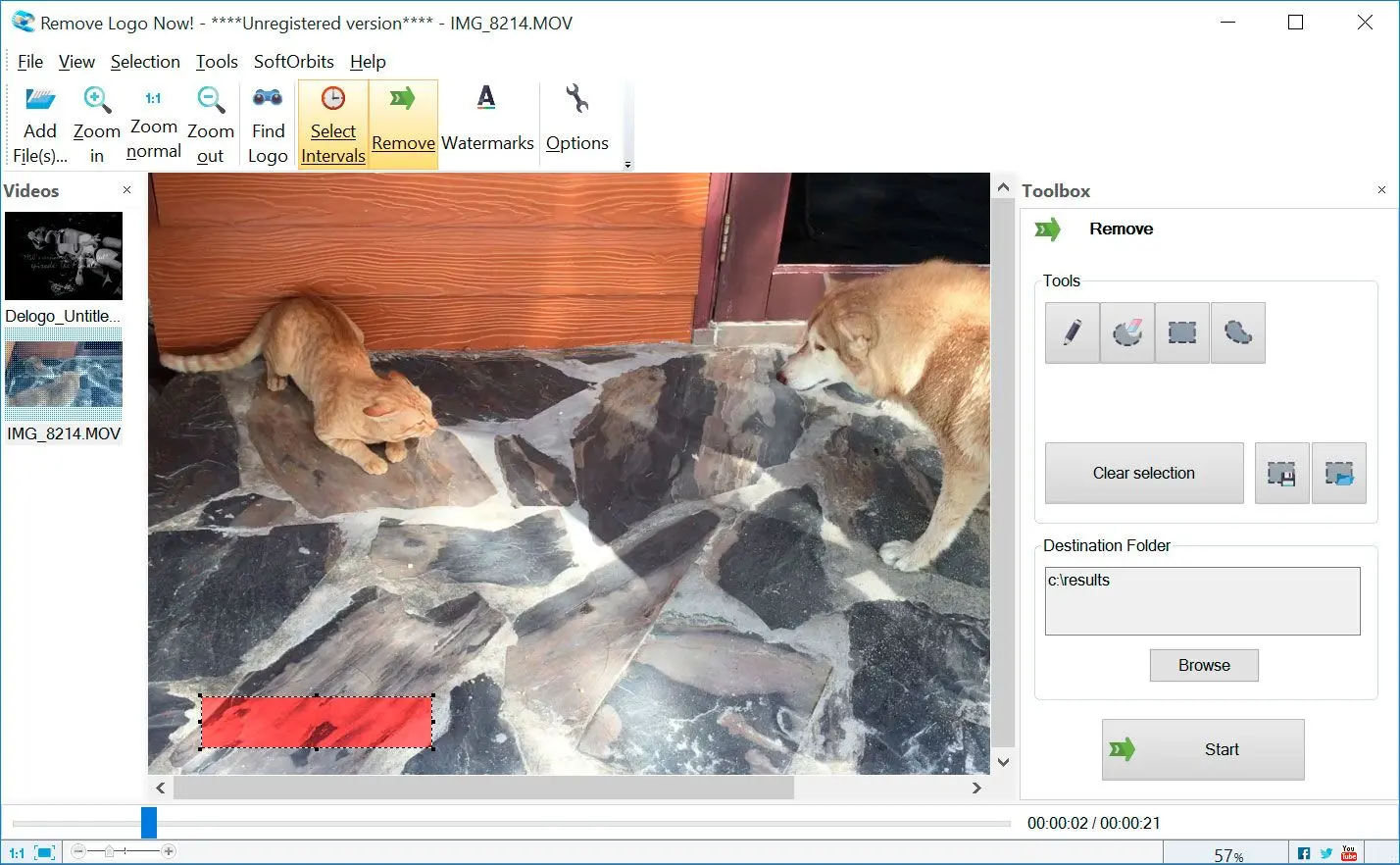
Remove Logo Now avoids the last three by running on your PC with a tight, adjustable mask and no upload. The same approach clears other recorders' marks too, like a Filmora watermark or a KineMaster watermark.
Remove Logo Now
Sources