How do you fix a USB drive Windows will not recognize?
TL;DR
First rule out the simple stuff by trying another port, then another PC, then Disk Management. If the drive shows as unallocated, a partition tool may help. If it does not appear at all, that is usually a hardware or connection problem no recovery software can solve.
A drive that will not show up is not always a repair job. Start by moving it to a different USB port and a different computer, since a dead port or a flaky hub fakes a dead drive often enough. Open Disk Management next. If your stick appears there as unallocated space or without a drive letter, you can assign a letter or use a partition tool like AOMEI to rebuild the partition, then run recovery. It is also worth a look in Device Manager: if the drive carries a warning icon, right-click it, uninstall the device, then unplug and replug the stick so Windows reinstalls the USB driver from scratch. A stale or corrupt driver is a common reason a healthy Verbatim or SanDisk stick refuses to mount, and reinstalling it costs nothing.
If the device does not appear in Disk Management at all, be realistic. Recovery software, including ours, needs Windows to at least see the hardware. A stick that is completely invisible has a connection or controller problem to solve first, and that is not something a scan can reach. The same brand-specific pattern shows up across sticks, which is why we keep separate walkthroughs for Kingston USB recovery and ADATA flash drive recovery.
Which Verbatim USB repair tool should you use?
TL;DR
Match the Verbatim USB repair tool to your problem. Files at risk means recovery first, a working drive with logical errors means a repair tool, and a completely dead stick means replacement. Free options exist on both sides.
Pick by the situation, not by the brand.
You just quick-formatted a stick or see "needs to be formatted" and want your files. Start with a recovery tool, our own Flash Drive Recovery or EaseUS, and free Recuva if you run its deep scan.
You shoot photos and the camera RAW files are on the stick. Use signature carving with Disk Drill or MiniTool, or PhotoRec for a free run. Our roundup of photo recovery software goes deeper on RAW.
You are comfortable at a command line and your budget is zero. TestDisk and PhotoRec cover RAW and formatted drives, while CHKDSK handles logical errors.
Your data is already backed up and you just want the drive usable. Now the repair side makes sense, with CHKDSK for logical errors and Rufus or AOMEI for the drive itself.
Your loss is on a memory card, not a stick. The same recover-first rule applies, and the same recovery tools read SD and microSD cards.
Also considered: tools we left off the list
We looked at more than nine tools. A few did not make the cut, and it is fair to say why.
DiskInternals Uneraser. A capable verbatim usb flash drive repair tool, but it overlaps heavily with Disk Drill's positioning, so listing both added length without adding a real choice.
HDD Low Level Format Tool. It can reset a drive that refuses to format normally, but it erases everything on the device with no recovery angle at all. That makes it a genuine last resort, not a repair tool, so we reference it here rather than rank it.
Vendor-only formatters like Transcend JetFlash Online Recovery and similar brand utilities. They can help, but each one works only on that manufacturer's drives, which is too narrow for a general list. Reach for them only if you own that exact brand.
A low-level format is the one tool here that wipes the drive completely. Treat it as a last resort, and only after you have recovered or given up on the data, because there is no undo.
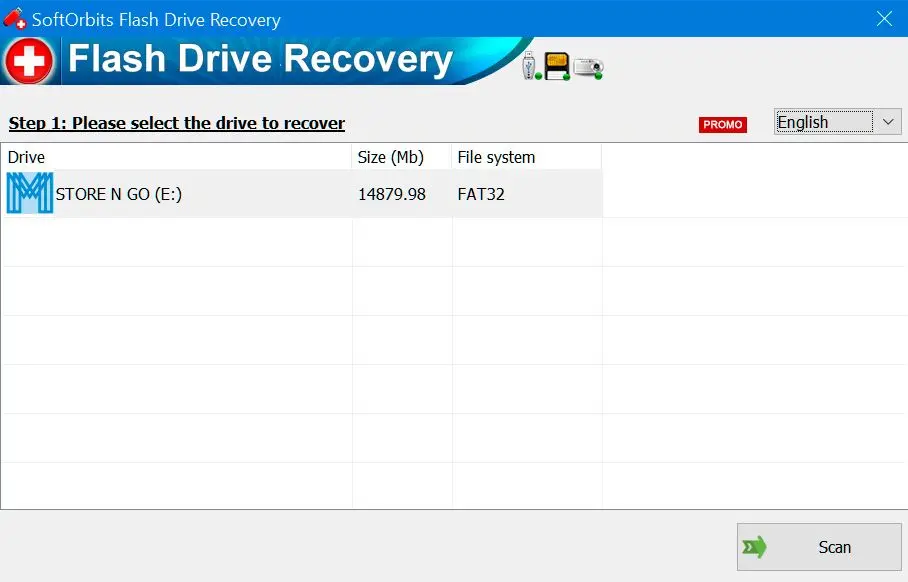
SoftOrbits Flash Drive Recovery
Compare the 9 best USB repair tools for Windows in 2026, free and paid. Recover your files first, then repair a corrupted or unrecognized flash drive.
Often yes for logical damage, and no for physical failure. A "needs to be formatted" error or a RAW file system can usually be repaired with CHKDSK or a verbatim usb flash drive repair tool. A dead controller or worn-out flash memory cannot, and no software fixes that. Diagnose the symptom first, and recover your files before you attempt any repair.
Work in order. Try the drive on another port and another PC to rule out a bad connection. Back up or recover your files with a recovery tool while the drive still mounts. Only then run CHKDSK /f or a dedicated usb repair tool, choosing the fix by the symptom you see, from a RAW file system to a stick Windows will not recognize.
There is no single winner, because "repair" splits into two jobs. To get files back, use a recovery tool such as our Flash Drive Recovery and EaseUS, or free Recuva and PhotoRec. To fix the drive itself, use CHKDSK for errors and Rufus or AOMEI for the drive. Free-tier limits and prices shift, so check the vendor before you rely on a number.
Pulling the drive out while Windows is still writing is the most common cause, and it corrupts the directory so the files stop matching their paths. Worn flash memory and bad sectors account for most of the rest, with a failing controller chip as the worst case. The first two are often recoverable, while a dead controller usually is not.
A drive that is not detected is usually a connection, driver, or hardware issue rather than a CHKDSK job. Try another port and PC, then check Disk Management. If it appears as unallocated, a partition tool can help. If it does not appear at all, recovery software cannot reach it, so that is a hardware problem to solve first.
Sometimes. CHKDSK /f can fix logical corruption without a full format, and a recovery tool can pull files off a drive that demands formatting without you ever formatting it. If the drive shows the "you need to format" prompt, recover the files first, because trusting CHKDSK alone on unsaved data is a gamble.
Most likely, yes. When every standard fix fails and the drive randomly disconnects or freezes the computer, community consensus on threads like the one above points to a physical or controller failure. No software, including ours, can repair that. Recover anything that still reads, then replace the drive.
Several picks here are free. For getting files back, Recuva and the open-source PhotoRec pull data off a corrupted stick at no cost, and our own Flash Drive Recovery scans and previews for free before you license it to save. For repairing the drive itself, CHKDSK is built into Windows and Rufus reformats a stubborn stick, both free. Be wary of "usb repair software full version free download" links, though. A real vendor gives you a free tier or an open-source build, not a cracked full version, and those download pages are where malware tends to hide.
It depends on the kind of damage. Logical damage, a RAW file system, a corrupted directory, or a "needs to be formatted" error, is usually repairable with CHKDSK or a repair tool, and your files can be recovered first. Physical damage is another story. If the connector, the controller chip, or the memory itself has failed, no software can bring the drive back, and pushing repairs on dying hardware only makes things worse. Work out which kind you are facing before you download anything. And once the files are safe on a healthy stick that will travel again, it is worth a minute to encrypt a folder with AES-256 before you hand the drive to anybody.
 SoftOrbits Flash Drive Recovery