Features
- MKV to MOV conversion with H.264, H.265/HEVC, and ProRes codec options
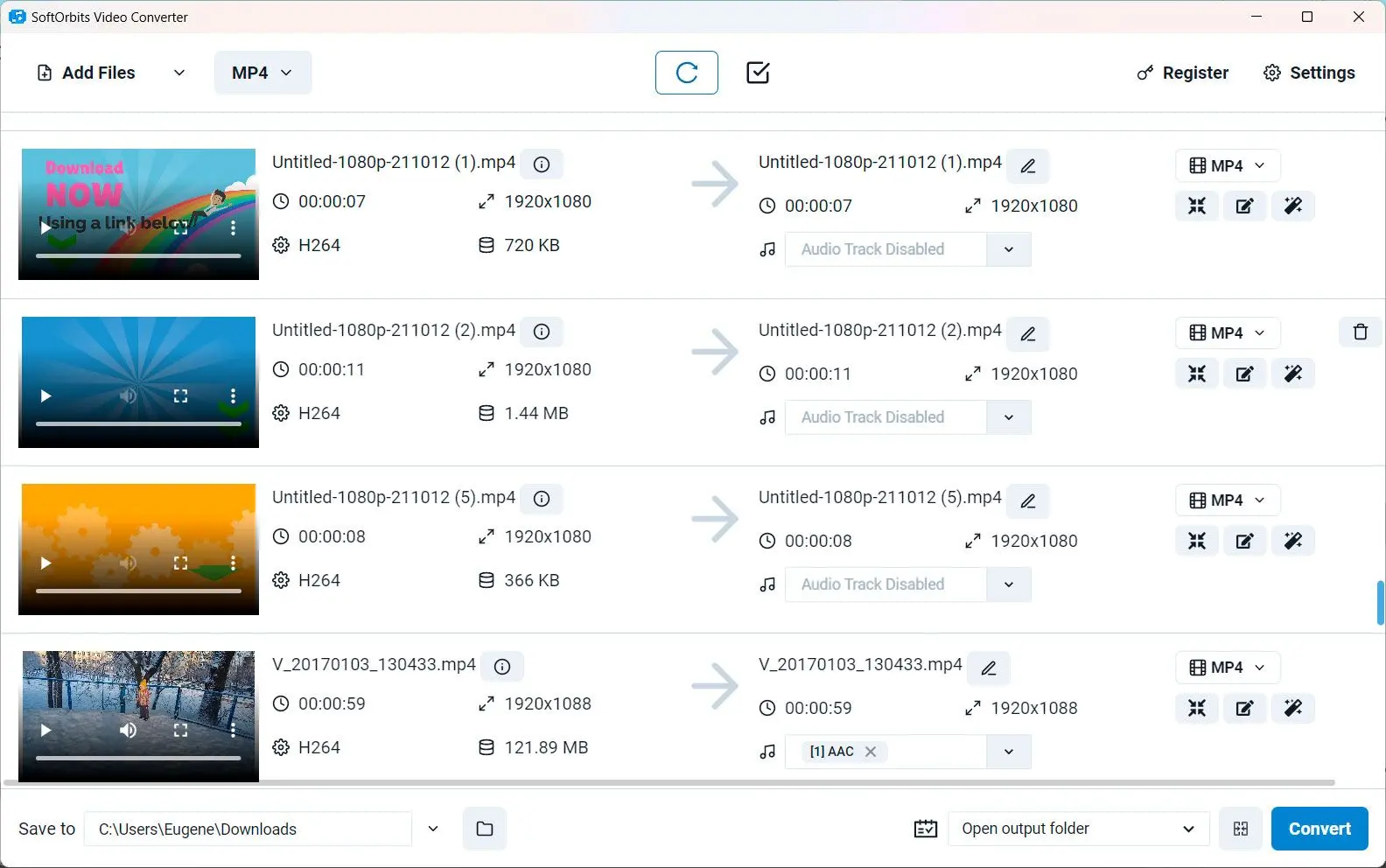
- Batch mode: add multiple MKV files or whole folders and convert in one run
- GPU acceleration (NVIDIA CUDA) for faster encoding on supported hardware
- 150+ input/output formats: MKV, MOV, MP4, AVI, WMV, FLV, WebM, 3GP, and more
- Subtitle preservation: keeps embedded SRT, ASS, and SSA subtitle tracks
- Audio track selection: choose which audio stream to include if the MKV has several
- Resolution and bitrate control: upscale, downscale, or keep the original resolution
- Frame rate adjustment for matching target playback requirements
- Video trimming and cropping before conversion
- AI-powered quality improvement and stabilization
- One-time purchase, no subscription
MKV is a flexible container: it can hold multiple video tracks, audio streams, subtitles, and chapter markers in a single file. That flexibility comes with a trade-off. QuickTime on Mac does not open MKV natively. iPhones and iPads refuse to play it. Final Cut Pro will not import it. iMovie ignores it.
MOV, Apple's own container, works everywhere in the Apple ecosystem and is also accepted by most Windows editors. When a project needs to move between a Windows editing station and a Mac-based review or delivery pipeline, converting MKV to MOV removes the compatibility headache.
MKV vs. MOV: When to Convert
MKV and MOV are both containers, not codecs. They wrap video, audio, and metadata into a single file. The difference is compatibility.
MKV strengths
MKV supports almost any codec combination. A single MKV can carry multiple audio tracks (different languages), multiple subtitle files, and chapter markers. VLC, PotPlayer, and most Android devices play MKV without issues. It is the standard output format for tools like HandBrake and MakeMKV.
MOV strengths
MOV was designed by Apple for QuickTime. It plays natively on macOS, iOS, and iPadOS. Final Cut Pro and iMovie import MOV directly. Many broadcast and post-production workflows require MOV with ProRes for delivery.
When converting makes sense
- Delivering video to a client or colleague who works on Mac.
- Importing footage into Final Cut Pro or iMovie.
- Transferring files to an iPhone or iPad for offline viewing.
- Uploading to a platform that accepts MOV but not MKV.
- Archiving with a ProRes codec inside a MOV container for editing flexibility.
Codec Settings for MKV to MOV
The container (MOV) is just the wrapper. The codec inside determines quality, file size, and compatibility. Here are the common choices:
H.264 (AVC)
The safe default. Every Apple device, every browser, and every editor made in the last 15 years reads H.264. File sizes are reasonable, encoding is fast. Pick this when the video needs to play everywhere without trouble.
H.265 (HEVC)
About 30-50% smaller files at the same visual quality compared to H.264. macOS 10.13+ and iOS 11+ support HEVC natively. Older systems and some web players may not. Use H.265 when file size matters and the target devices are recent.
ProRes
A high-bitrate codec used in professional post-production. Files are large (often 10-20x bigger than H.264 at the same resolution), but editing performance is smooth because ProRes is designed for timeline scrubbing, not streaming. Use ProRes when delivering rushes or masters to a Final Cut Pro workflow.
Audio
AAC is the standard audio codec for MOV files. It compresses well and plays on every Apple device. If the source MKV carries lossless audio (FLAC, DTS), the MKV to MOV converter software transcodes it to AAC by default. The bitrate setting controls the quality: 192 kbps is fine for spoken content, 320 kbps for music. Batch Convert MKV to MOV
Converting files one at a time works for the occasional re-encode, but video projects often produce dozens of MKV clips. SoftOrbits MKV to MOV converter software accepts entire folders. Add the directory, set the output format and codec once, and the program processes every file in sequence (or in parallel on multi-core CPUs). The output folder structure mirrors the input, so files stay organized.
This is useful after recording a multi-camera shoot, ripping a disc collection, or downloading a series of tutorials that need to play on a Mac.
 SoftOrbits Video Converter