
Convert with ffmpeg on the command line
ffmpeg handles the conversion in one command: ffmpeg -i input.flac -c:a alac -map_metadata 0 output.m4a. The -map_metadata 0 flag carries your tags across.
Comfortable with a command line? ffmpeg is the most direct route, and it is free. Open a terminal in the folder with your file and run:
ffmpeg -i "input.flac" -c:a alac -map_metadata 0 "output.m4a".
The -c:a alac part sets Apple Lossless as the codec, and -map_metadata 0 copies your existing tags into the new file.
One honest warning from real use: ffmpeg can choke on part of a large library. A developer who scripted this on the Meziantou blog found direct FLAC-to-ALAC "encountered errors with about half of my library." The fix is to update to a current ffmpeg build, or route stubborn files through WAV first (FLAC to WAV, then WAV to ALAC). That stays lossless, just an extra step. For a handful of files this is fine; for a whole collection, a batch tool saves the headache.
Batch-convert your whole FLAC library
For hundreds of albums, add the entire root folder at once and let the tool process everything in one run. A GUI converter or a foobar2000 batch job both handle nested album folders.
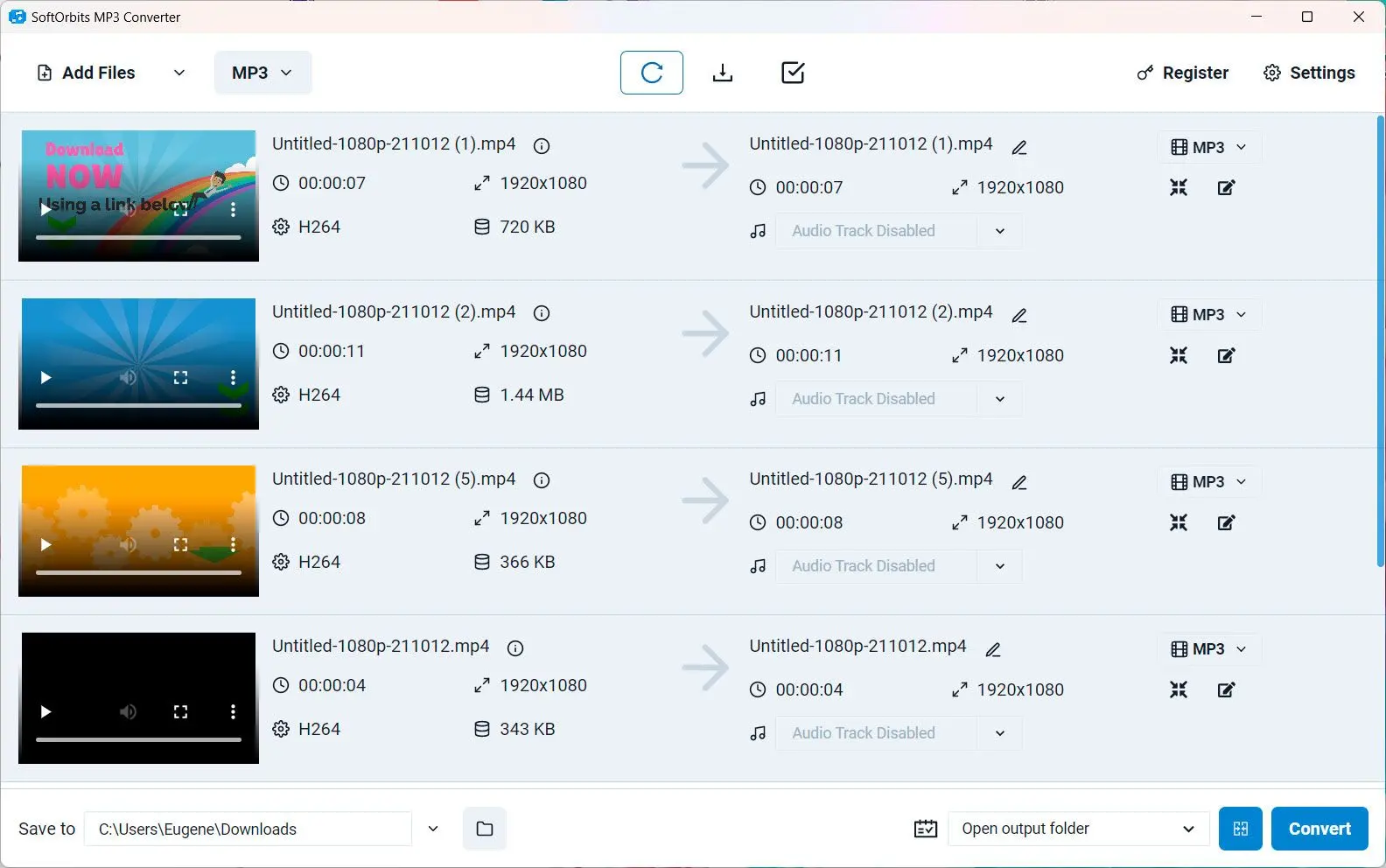
Converting a few singles is quick by any method. Converting a 500-album rip is where the approach matters. Adding files one at a time is a non-starter, so use a tool that takes a parent folder and walks every subfolder. SoftOrbits MP3 Converter and foobar2000 both accept a whole directory tree, queue every track, and keep the album structure in the output.
Before you launch a big batch, run a 30-second test on one album first. Open the result, confirm it shows up as Apple Lossless, and check the tags and album art survived. Once one album looks right, the same settings hold for the rest, and you can leave the batch running while you do something else.
Most converters copy tags automatically, but album art can drop out if it was stored as a separate folder.jpg file rather than embedded in the FLAC. Use a tool that embeds art, or embed it before converting.
Metadata is the part people fear losing. On the Apple Community forum, one collector with a large classical library worried about exactly this: "I do not want to lose any of this info that I've painstakingly added to my library over the years," meaning composer, orchestra, conductor, and all. The good news is that ALAC supports the same tag fields, and any decent converter carries them over.
Album art is the trickier piece. If the cover is embedded inside each FLAC, it transfers fine. If it lives as a loose folder.jpg next to the tracks, many converters will not pull it in. That is a recurring complaint on the dBpoweramp forum. The clean fix is to embed the artwork into your FLAC files first (most tag editors do this in bulk), then convert. That way the art rides along inside every M4A.
Which method should you choose
Pick a GUI converter for speed and large batches, foobar2000 if you want free and do not mind setup, or ffmpeg if you live on the command line.
There is no single best tool. It depends on how many files you have and how much fuss you tolerate. Here is the quick comparison.
| Method | Cost | Best for | Watch out for |
|---|---|---|---|
| SoftOrbits MP3 Converter | Free trial, paid license | Fast batches, simple UI | Pick ALAC, not AAC |
| foobar2000 | Free | Power users on Windows | Must install Encoder Pack |
| ffmpeg | Free | Command line, scripting | Can fail on some files |
| Online converters | Free, with limits | One or two files | Upload limits, privacy, ads |
For most people moving a whole collection into Apple Music, a desktop GUI like SoftOrbits MP3 Converter is the path of least resistance. Online converters work for a one-off track, but they cap file sizes and send your music to a stranger's server.
SoftOrbits MP3 Converter is a versatile tool for turning music and audio clips between formats: move between containers, codecs, and bitrates, with lossless paths when you only need a new wrapper.
Pitfalls when converting FLAC to ALAC
Three mistakes cause most of the trouble. People export lossy AAC by accident, trust sketchy converter sites, or assume album art will follow when it was never embedded.
Both use the .M4A extension, so it is easy to grab the wrong one. AAC is lossy and permanently discards data; ALAC is lossless. People on Quora double-check the result is truly lossless for this reason. Always confirm the output says Apple Lossless or ALAC before you commit a whole library to it.
Windows users asking for a safe method on Quora and the Apple Community get the same warning: shady converter sites carry "a non-zero chance of getting infected with some form of adware or malware." Stick to a known desktop app or an open-source tool.
As noted above, direct conversion can error on some files. If a batch stops, update ffmpeg or route the failures through WAV first instead of forcing the direct path.
If your cover is a folder.jpg sidecar, do not blame the converter when it disappears. It is the single most common art complaint across converter forums. A SuperUser answer on porting tags and cover art walks through the fix. Embed the art into the FLAC files first, then convert.
After conversion, iTunes can auto-match the wrong artwork. One collector on the Apple Community forum got "a contemporary cover, where my cover was from an older pressing." Turn off automatic artwork download in Apple Music settings before you import.
Sources